Building the Infrastructure for the ASEAN Carbon Economy.
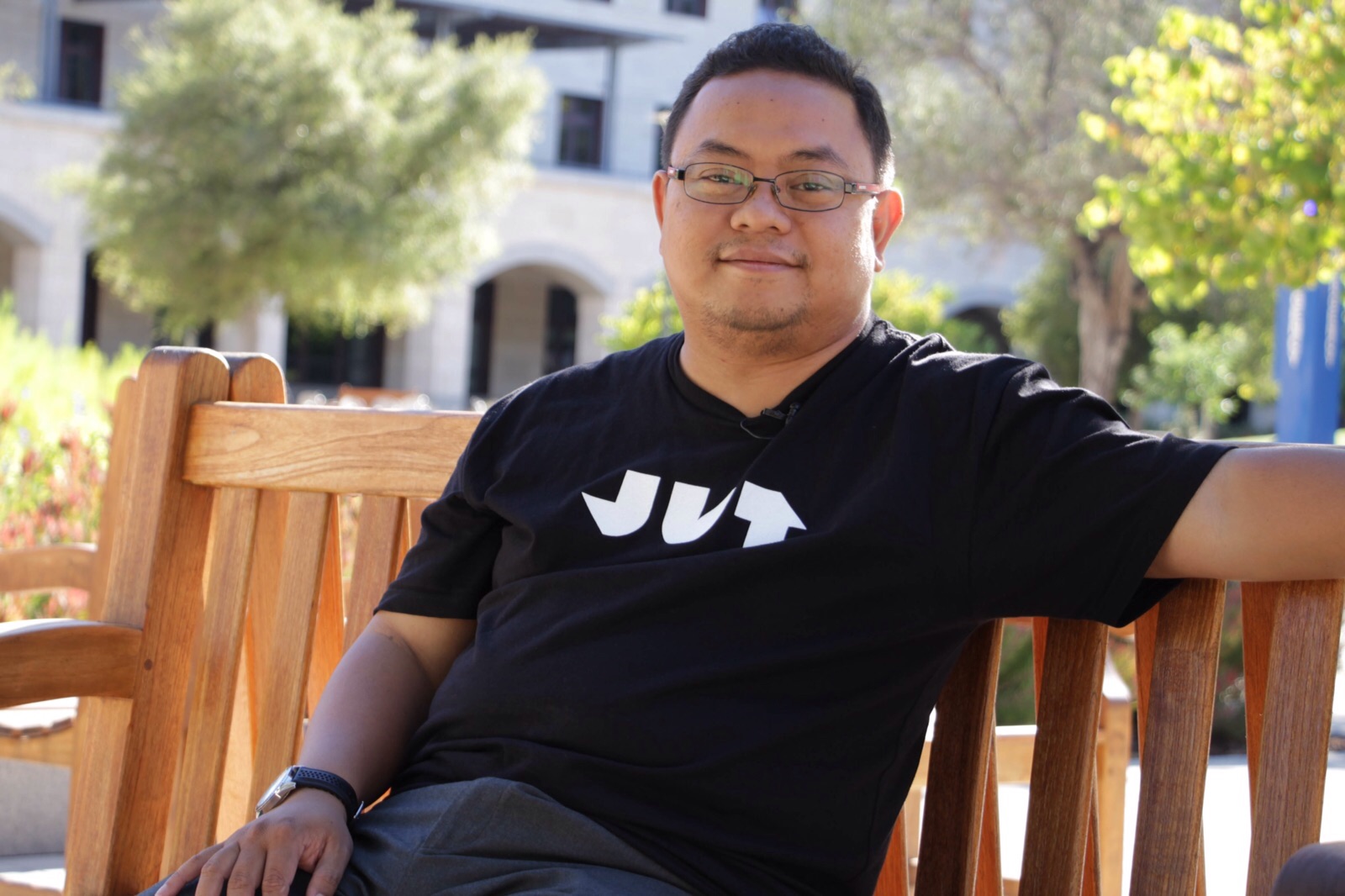
My name is Farid Nor. Over the past two decades I have had the privilege of building thriving technology companies in Malaysia. Most of what I have built has been practical — solving problems that were visible, measurable, and close at hand. This is the first time I have built something because a quiet worry would not leave me alone.
I want to be honest from the beginning: I am not a climate scientist. I graduated in Chemical Engineering from Penn State University some two decades ago. I understand science, fundamentally, but I do not come to this with decades of fieldwork or peer-reviewed publications. What I bring is a deep familiarity with building systems — and a growing conviction that the systems currently governing ASEAN's carbon markets were not built with us in mind. That realisation has stayed with me. And rather than simply feeling frustrated by it, I decided to do something about it. Not alone — that would be impossible and frankly presumptuous — but together with the researchers, scientists, and practitioners who understand these ecosystems far better than I ever will.
Southeast Asia is home to some of the most extraordinary carbon ecosystems on Earth. Our peatlands hold carbon accumulated over thousands of years. Our mangroves sequester more carbon per hectare than most forests. Our rainforests are irreplaceable in ways science is still discovering. The researchers who study these ecosystems — many of them in Malaysian and Indonesian universities — have spent careers building knowledge the world genuinely needs.
And yet when a project developer in Sarawak wants to restore a peatland and attract climate finance, they are asked to pay a Washington DC organisation more than RM 2 million, wait six to eight months, and have their work assessed using methodologies designed for the Amazon — by auditors who may never have walked through a tropical peat swamp. When a Singapore corporate wants to offset its forest carbon emissions against a credible ASEAN standard, there is no Article 6.2-compliant pathway that automatically documents the corresponding adjustment between the Malaysian government and the Singapore NEA. When an ASEAN government wants to participate in the post-COP29 ASEAN Common Carbon Framework, there is no technical infrastructure to make those trades happen cleanly.
What is missing is not more science — the science exists, in our universities and field stations. What is missing is the legal-technical infrastructure that connects it: the registry that tracks government-to-government Corresponding Adjustments, the dMRV pipeline that turns satellite data into verified credits, the methodology framework that governs what counts as a genuine tonne. Rimba Standards builds that infrastructure. Not as a competitor to ASEAN's national registries, but as the substrate they can plug into — and in some cases, as the platform they run on.
Rimba Standards is in its founding phase, but the strategic framing has sharpened considerably. The primary problem in ASEAN carbon markets in 2026 is no longer certification cost — it is the absence of a trusted legal-technical bridge between national carbon registries, project developers, and international buyers. Following COP29, Malaysia, Indonesia, Thailand, and Singapore signed a Memorandum of Collaboration to establish the ASEAN Common Carbon Framework (AACF). The infrastructure to make that framework operational does not yet exist. Rimba builds it.
The lead product is the Registry — specifically, the Article 6.2 Corresponding Adjustment tracking layer that automates the legal handshake between host governments (like Malaysia's NRES) and buyer markets (like Singapore's NEA). Every bilateral carbon trade currently requires manual government-to-government paperwork with no standardised digital workflow. Verra cannot solve this — it has no mandate to interface with ASEAN national registries. ACI is an urban-tech standard with no nature-based science. No one has built this yet. That is the gap Rimba fills.
Three things define how Rimba is positioned for 2026. First, the technology platform is already being built using an existing engineering team — we are not waiting for capital to start. Second, we have adopted a buyer-led commercial model where project developers pay nothing upfront and Singapore anchor buyers commit to Forward Purchase Agreements, with developer fees collected as post-issuance success fees. Third, and most importantly, the revenue architecture has evolved: we are building Registry Infrastructure and CA-Tracking SaaS fees as the primary revenue layer — not project certification. Every credit that trades through the AACF framework, whether certified by Rimba or anyone else, can pass through a registry that tracks corresponding adjustments. That is where the infrastructure value lives.
We are actively recruiting two co-founders. The first is a Carbon Science and Methodology Lead — someone with deep knowledge of carbon accounting, ideally from a background at Verra, Gold Standard, or a major VVB, who can manage our scientific panel and represent Rimba in technical conversations with MFF, BCX, and MAS. The second is a Singapore Market Access Lead — Singapore-based, with active relationships in the corporate sustainability or green finance community, who can open doors at DBS, Sembcorp, Singapore Airlines, and CIX. If either profile describes you or someone you know, please reach out.
We are also still looking for scientists. The researchers who will co-develop Rimba's methodologies are the foundation of everything. We are specifically seeking researchers in tropical peatland hydrology, mangrove blue carbon, REDD+ forest carbon baselines, and smallholder carbon economics — primarily in Malaysian and Indonesian universities. Your work would co-author the methodology. Your institution would be recognised as a founding scientific partner.
And we are keen to hear from carbon project developers — particularly those working on peatland restoration, mangrove rehabilitation, or community forestry in Malaysia, Indonesia, or Thailand — who feel that the current certification process does not serve them well. If you have a project and a story, we would genuinely like to listen.
You are welcome to reach out at: [email protected]